Business Insurance Explained for Freelancers: Risks, Costs & Coverage Decisions
Freelancers often explore professional liability insurance to protect against client claims.
Freelancers and independent professionals enjoy the freedom of working for themselves, but that freedom also comes with responsibility. When something goes wrong during a client project—such as a mistake in advice, a missed deliverable, or a dispute over results—the financial risk usually falls on the freelancer rather than an employer.
Situations like these are not common, but they do happen in client-based businesses. A marketing consultant might publish an incorrect campaign that costs a client money. A web designer could accidentally cause downtime during a website update. Even a misunderstanding about project expectations can sometimes escalate into a dispute.
Business insurance exists to help protect professionals in these types of situations. Instead of viewing insurance simply as a financial product, it can be understood as a way to manage professional risk while running an independent business.
This guide explains how business insurance works for freelancers and independent professionals in the United States, including the risks freelancers may face, the types of coverage often considered, typical cost ranges, and how professionals decide what protection makes sense for their work.
This article is for informational purposes only and should not be considered insurance or legal advice.
Why Freelancers and Independent Professionals Worry About Insurance
Many freelancers begin their careers focused on building skills, attracting clients, and delivering quality work. Insurance rarely becomes a priority in the early stages of freelancing. However, as independent professionals take on more client projects, they often start to realize that certain situations can expose them to financial risk.
Unlike traditional employees, freelancers operate without the legal protection of an employer. If a client claims that a project caused financial loss, property damage, or reputational harm, the freelancer may need to address the situation directly. In some cases, this may involve legal discussions or disputes about responsibility.
Several types of situations can lead freelancers to think about business insurance.
Client Disputes Over Work Outcomes
Client relationships are generally positive, but disagreements can occur. A client may believe that a project did not meet expectations or that the results of the work caused financial harm to their business.
For example, a marketing consultant might launch a campaign that fails to perform as expected, leading the client to claim financial losses. Even when a freelancer acted professionally, disputes about responsibility can sometimes arise.
Professional Advice That Leads to Loss
Freelancers who provide advice or strategic guidance—such as consultants, coaches, or IT specialists—may face situations where a client believes their recommendation caused financial damage.
If a client relies on professional advice and later experiences losses, they may attempt to recover those losses through a claim. Situations like this are one reason many consultants consider professional liability insurance.
Accidental Errors During Client Projects
Mistakes can occur in any professional field. A web developer might accidentally introduce an error that causes a website outage. A freelance writer could unknowingly use copyrighted material. A designer may deliver files that create unexpected production problems.
While most issues can be resolved quickly, some situations may lead to financial disputes or legal claims.
Contract Requirements from Clients
Some freelancers first encounter insurance requirements when working with larger clients. Companies sometimes require independent professionals to carry certain types of liability insurance before signing contracts.
These requirements are common in industries such as consulting, technology services, and marketing.
What Business Insurance Actually Protects
Business insurance is often described as protection against financial loss, but for freelancers and independent professionals it is more useful to think of it as protection against the risks that come with working directly with clients.
When a professional service leads to unexpected problems, the cost of resolving the situation may involve more than simply fixing the work. In some cases, a freelancer may face legal expenses, compensation claims, or disputes over responsibility for a client’s financial loss. Business insurance policies are designed to help manage these situations.
Several types of risks are commonly associated with freelance and consulting work.
Financial Claims from Professional Work
Many freelancers provide services that influence a client’s business outcomes. Consultants, marketers, developers, and designers often make decisions or recommendations that affect a client’s revenue, operations, or digital systems.
If a client believes that a professional mistake caused financial harm, they may attempt to recover those losses. Even when a freelancer disagrees with the claim, responding to the situation may require legal advice or defense. Certain insurance policies are designed to help address these types of professional liability risks.
Third-Party Injury or Property Damage
While many freelancers work remotely, some projects involve in-person meetings, equipment use, or access to client property. In these situations, accidents can sometimes occur.
For example, a consultant visiting a client’s office could accidentally damage equipment, or a meeting attendee could suffer an injury during a business event. Situations like these may lead to claims related to property damage or bodily injury.
Legal Defense and Dispute Costs
One of the most overlooked risks in freelance work is the cost of defending against a claim, even when the claim itself is questionable. Legal consultations, document preparation, and dispute resolution can quickly become expensive.
Some business insurance policies help cover legal defense costs associated with claims connected to professional work or business activities. This support can help freelancers address disputes without facing the full financial burden alone.
Business insurance does not eliminate professional risk entirely, but it can play an important role in managing those risks. Understanding what types of situations insurance policies are designed to address helps freelancers decide whether certain coverage options make sense for their work.
In the next section, we will look at the main types of business insurance policies freelancers often consider, and how each type addresses different categories of risk.
Main Types of Business Insurance for Freelancers
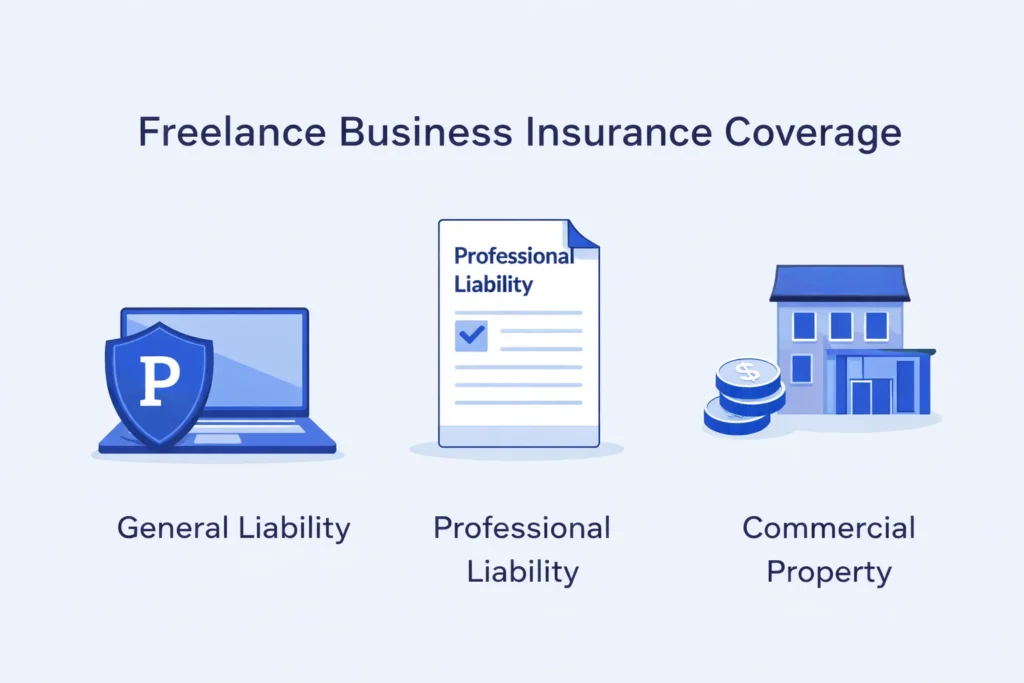
Freelancers and independent professionals often hear several different insurance terms when researching coverage options. While the names of policies may sound technical, most business insurance for freelancers focuses on protecting against a few specific categories of risk.
Different policies exist because different types of situations create different types of liability. Understanding how these policies work can help freelancers decide which forms of protection are relevant for their work.
Below are the most common types of business insurance policies independent professionals often consider.
Professional Liability Insurance (Errors and Omissions)
Professional liability insurance, often called Errors and Omissions (E&O) insurance, is designed to address claims related to professional mistakes, negligence, or failure to deliver services as expected.
Many freelancers consider professional liability insurance to protect against claims related to mistakes or professional errors.
This type of insurance is especially relevant for freelancers who provide professional advice, consulting services, creative work, or technical expertise. If a client believes that a professional error caused financial harm to their business, they may attempt to recover those losses through a claim.
For example, a marketing consultant may launch a campaign that accidentally violates advertising regulations. A software developer might deploy an update that causes a client’s website to stop functioning. Even when the freelancer acted in good faith, situations like these can sometimes lead to disputes about responsibility.
Professional liability insurance helps address claims related to professional services and often covers legal defense costs associated with these disputes.
General Liability Insurance
General liability insurance focuses on a different category of risk: third-party injury, property damage, and certain legal claims related to business activities.
While many freelancers work remotely, some projects involve meeting clients in person, attending events, or interacting with client property. In these situations, accidents can occasionally occur.
For instance, a consultant visiting a client’s office could accidentally damage equipment, or a meeting participant might experience an injury during a business event. In these cases, general liability insurance may help address claims related to bodily injury or property damage.
Because professional liability and general liability cover different situations, freelancers sometimes evaluate both policies depending on the nature of their work.
Business Owner’s Policy (BOP)
A Business Owner’s Policy (BOP) combines multiple types of coverage into a single policy package. These policies typically include general liability coverage along with protection for certain business assets.
BOP policies are more common for small businesses that maintain physical offices, equipment, or retail locations. For many freelancers who work remotely, a standalone liability policy may be more common than a full business owner’s policy.
However, as a freelance business grows—particularly if it begins hiring employees or maintaining office space—a broader policy structure may become relevant.
Additional Coverage Freelancers Sometimes Consider
In some situations, freelancers may encounter additional insurance types depending on their work environment or client requirements.
Examples may include:
• Cyber liability insurance for professionals who manage sensitive digital data
• Equipment coverage for freelancers using specialized tools or hardware
• Workers’ compensation insurance if employees are hired
Not every freelancer needs these policies, but understanding the available options can help professionals evaluate their risk exposure more carefully.
How Much Business Insurance Costs for Freelancers
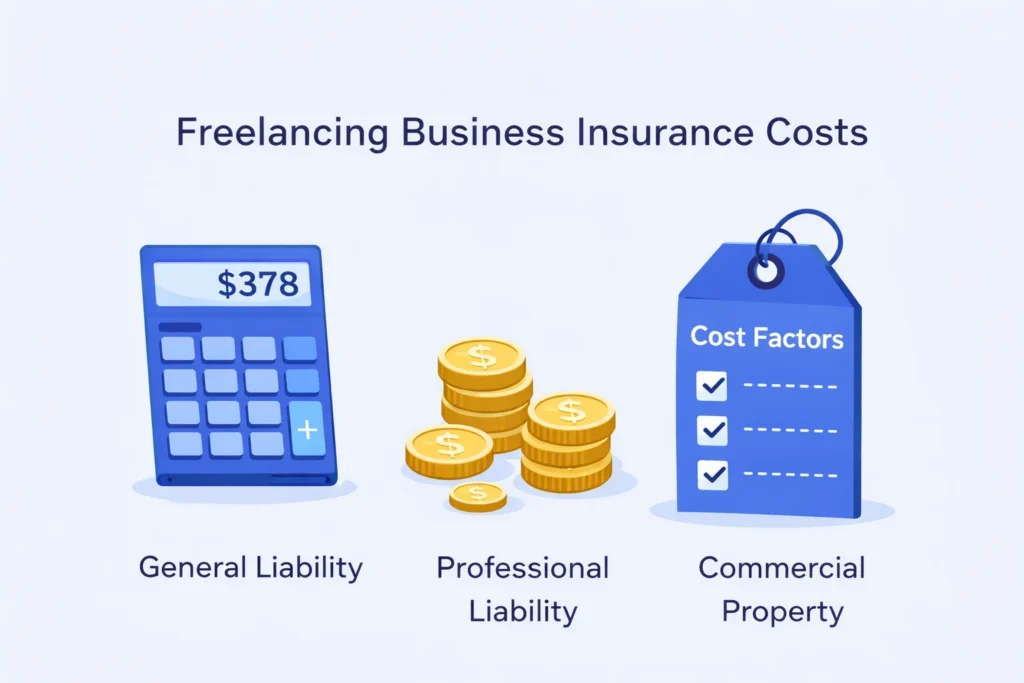
One of the most common questions freelancers ask when researching insurance is how much coverage typically costs. While insurance pricing varies depending on the profession, risk level, and coverage limits, many independent professionals are often surprised that basic liability policies can be relatively affordable.
Freelancers can also review guidance from the Small Business Administration to better understand how small business insurance works.
For freelancers who primarily provide professional services, the most commonly considered policy is professional liability insurance. In many cases, freelancers report monthly premiums that fall within a moderate range compared with other business expenses.
Typical starting ranges sometimes look like:
• Professional liability insurance: approximately $25–$60 per month
• General liability insurance: approximately $30–$70 per month
These figures are only general examples. Actual pricing can vary depending on several factors related to the freelancer’s business activities.
Factors That Influence Insurance Pricing
Insurance providers evaluate several variables when calculating premiums for independent professionals. These factors help insurers estimate the level of risk associated with the type of work being performed.
Some of the most common factors include:
• Industry or profession – Certain fields involve higher financial or legal exposure than others.
• Annual revenue – Businesses generating higher revenue may carry greater potential liability.
• Coverage limits selected – Higher policy limits generally increase premium costs.
• Claims history – Previous insurance claims can influence pricing.
• Business location – Insurance regulations and legal environments differ between states.
For example, a freelance web developer working independently may face a different risk profile than a management consultant advising large corporate clients. As a result, insurance providers may price policies differently for each profession.
Why Some Freelancers Pay More Than Others
Another reason pricing varies is that freelancers sometimes choose different levels of protection based on their client relationships and contract requirements.
Some clients—especially larger companies—may request proof of insurance before signing service agreements. In these cases, freelancers may select higher coverage limits to meet contract requirements.
Freelancers who handle sensitive data, manage large advertising budgets, or provide strategic consulting may also consider higher coverage levels because their work can influence significant financial outcomes for clients.
Insurance costs and coverage may vary depending on location, industry, and business activities.
| Insurance | Typical Monthly Cost |
|---|---|
| Professional Liability | $25 – $60 |
| General Liability | $30 – $70 |
While cost is an important consideration, many freelancers evaluate insurance decisions by balancing premium costs against potential risk exposure. Understanding the types of situations that insurance policies are designed to address can help independent professionals make more informed decisions about whether coverage makes sense for their business.
How Freelancers Choose the Right Insurance Coverage
Deciding whether to purchase business insurance—and which type of coverage to choose—often depends on the type of work a freelancer performs and the level of risk associated with that work. While not every independent professional will need the same policies, many freelancers evaluate insurance decisions by carefully considering a few practical factors.
Understanding these factors can help freelancers determine whether insurance coverage is appropriate for their situation.
Understanding Your Professional Risk
The first step many freelancers take is evaluating the potential impact their work could have on a client’s business. Some professions involve minimal risk, while others involve decisions or actions that may influence a client’s revenue, systems, or operations.
For example, a freelance writer creating blog content may face different levels of liability compared with a consultant providing strategic business advice or a developer managing a client’s website infrastructure.
By considering how their work could potentially affect a client, freelancers can begin to understand whether certain types of liability coverage may be worth exploring.
Reviewing Client Contract Requirements
Another situation where freelancers begin thinking about insurance is when clients request proof of coverage. Some companies require independent contractors to carry liability insurance before signing contracts or beginning work.
These requirements are more common when freelancers work with larger organizations, government entities, or corporate clients. In these cases, freelancers may review insurance options specifically to meet contractual obligations.
Even when coverage is not required, understanding what clients expect can help freelancers evaluate whether insurance may provide additional professional credibility.
Comparing Insurance Providers
Freelancers who decide to explore insurance options often compare multiple providers before selecting a policy. Insurance companies may offer different coverage structures, policy limits, pricing models, and online management tools.
When comparing providers, freelancers commonly review factors such as:
• Policy coverage limits
• Monthly premium costs
• Claim support services
• Industry-specific coverage options
• Ease of managing policies online
Taking time to compare providers can help freelancers better understand the available options before making a decision.
Choosing Appropriate Coverage Limits
Coverage limits refer to the maximum amount an insurance policy will pay in the event of a claim. Freelancers sometimes choose limits based on the size of their projects, the industries they work in, or the expectations of their clients.
For example, a freelancer working with small local businesses may select lower coverage limits than someone consulting for larger corporations where potential financial exposure is higher.
Evaluating coverage limits alongside the type of services provided can help freelancers choose protection that aligns with the scale of their work.
Choosing insurance coverage is ultimately a personal business decision that depends on individual circumstances. By understanding professional risk, reviewing client requirements, and comparing available options, freelancers can make more informed decisions about whether insurance protection fits their overall business strategy.
Business Insurance and Different Business Structures
Freelancers often organize their work under different business structures. Some operate as sole proprietors, while others create limited liability companies (LLCs) or work as independent contractors under client agreements. While these structures can influence taxes and legal responsibilities, they do not eliminate all forms of professional risk.
Understanding how business structure affects liability can help freelancers evaluate whether insurance protection may still be relevant for their work.
Sole Proprietors
Many freelancers begin their careers operating as sole proprietors. In this structure, the individual and the business are legally considered the same entity. This means the freelancer is personally responsible for business obligations, including potential legal claims related to their work.
Because there is no legal separation between the individual and the business, disputes or claims involving professional services may affect personal finances. For this reason, some sole proprietors explore liability insurance as a way to help manage potential risks associated with client work.
Single-Member LLCs
Some freelancers choose to create a single-member limited liability company (LLC). An LLC can provide certain legal protections by separating the business entity from the owner in specific situations. This structure is often used for tax flexibility and business organization.
However, forming an LLC does not prevent all potential liability related to professional services. If a client believes a freelancer’s work caused financial harm or negligence, claims may still be directed at the individual professional responsible for the work.
Because of this, freelancers who operate through an LLC sometimes evaluate liability insurance as an additional layer of protection alongside their business structure.
Independent Contractors
Freelancers who work as independent contractors often sign service agreements with clients that define responsibilities, deliverables, and project expectations. These agreements may also include clauses related to liability and risk.
In some cases, clients may request proof of liability insurance before finalizing contracts. This is particularly common when working with larger companies, agencies, or organizations that require contractors to carry certain types of coverage.
Understanding how contractual relationships interact with professional risk can help freelancers determine whether insurance coverage is worth considering.
While business structure can influence how a freelance business operates, it does not remove the possibility of disputes or claims connected to professional services. Many freelancers evaluate insurance options by considering both their legal structure and the nature of the work they perform for clients.
Insurance Needs Across Different Freelance Industries
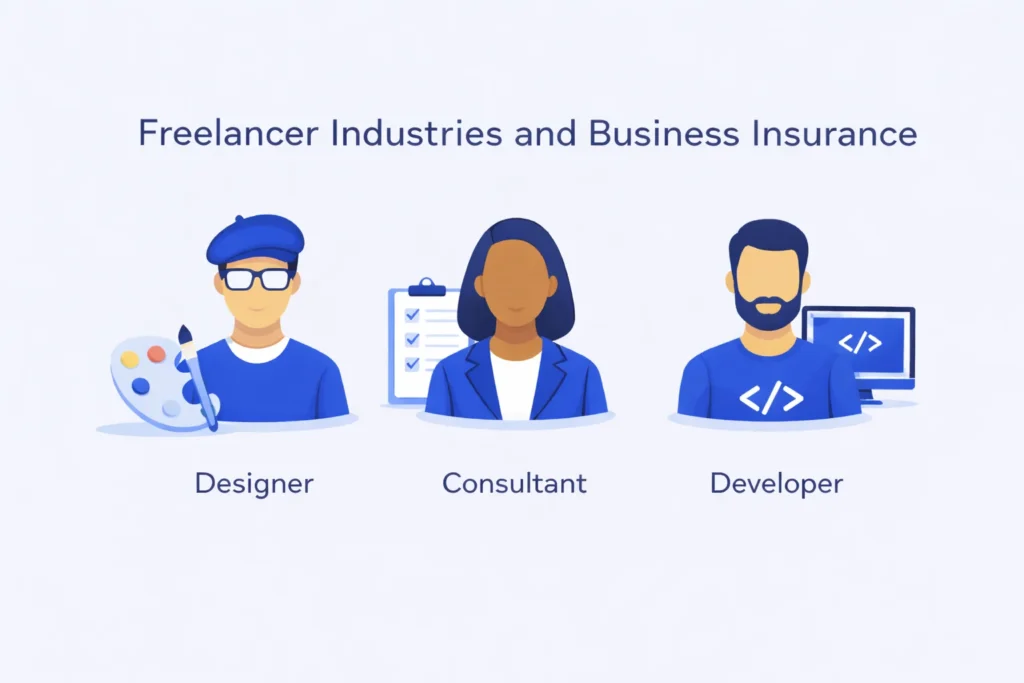
Freelancers work across many industries, and the level of professional risk can vary significantly depending on the type of services being provided. While some freelance roles involve relatively low financial exposure, others involve decisions, systems, or projects that can have a direct impact on a client’s business operations.
Because of these differences, freelancers often evaluate insurance coverage based on the nature of their industry and the potential consequences if a project does not go as planned.
Marketing Consultants and Agencies
Freelance marketers and consultants often manage advertising campaigns, digital marketing strategies, and brand communications for clients. Their work may influence a client’s revenue, customer engagement, and public image.
For example, an advertising campaign could unintentionally violate platform rules or copyright regulations, leading to financial losses or reputational damage for a client. Situations like these sometimes lead professionals in marketing fields to explore liability coverage designed for consulting services.
IT Consultants and Developers
Freelancers working in technology roles—such as developers, cybersecurity specialists, or IT consultants—often manage systems that are critical to a client’s daily operations.
A software error, system outage, or data-related issue can sometimes disrupt a client’s business activity. While many problems are resolved quickly, technology professionals may consider insurance coverage because their work can affect important digital infrastructure.
Coaches and Professional Advisors
Coaches, trainers, and business advisors provide guidance that can influence important decisions for their clients. Whether offering career coaching, business consulting, or personal development services, their recommendations may shape how clients approach financial or strategic choices.
If a client later believes that advice contributed to financial loss or missed opportunities, disputes about responsibility can occasionally arise.
Designers and Creative Professionals
Creative freelancers—including graphic designers, web designers, and video editors—often handle projects involving intellectual property, brand assets, and digital content.
For example, using copyrighted materials without permission or delivering files that cause production errors could potentially create disputes between freelancers and clients. While such issues are uncommon, they are situations that sometimes influence how creative professionals evaluate risk.
| Insurance Type | What It Covers | Who Typically Needs It |
|---|---|---|
| Professional Liability (E&O) | Claims related to professional mistakes, negligence, or financial loss caused to a client | Consultants, developers, marketers, designers |
| General Liability | Third-party injury, property damage, and accidents during business activities | Freelancers who meet clients or attend business events |
| Business Owner’s Policy (BOP) | Combines general liability with property protection for business assets | Small businesses with offices or equipment |
Understanding how professional risk varies across industries helps freelancers think more carefully about their exposure. Rather than assuming that every freelancer faces the same level of risk, evaluating insurance options based on industry context allows professionals to make more informed decisions about protection.
Best Insurance Providers for Freelancers: What to Compare
Freelancers who decide to explore insurance options often find that multiple companies offer policies designed for small businesses and independent professionals. These providers may differ in how policies are structured, how claims are handled, and how easily freelancers can manage coverage online.
Because insurance policies involve legal and financial protection, many freelancers take time to compare providers before choosing a policy.
What to Look for When Comparing Providers
When reviewing insurance providers, freelancers often evaluate several factors that influence both coverage quality and overall experience.
Some of the most common considerations include:
• Coverage limits offered by the policy
• Types of claims covered under the policy terms
• Monthly premium costs and deductibles
• Customer support and claims assistance
• Ease of managing policies online
Understanding these factors can help freelancers evaluate policies beyond simply comparing prices.
Online Insurance Platforms vs Traditional Providers
In recent years, several insurance companies have developed online platforms designed specifically for small businesses and freelancers. These platforms allow professionals to request quotes, purchase policies, and manage coverage entirely online.
Traditional insurance providers, on the other hand, may offer policies through agents or brokers who assist with policy selection and claims support.
Both approaches can offer advantages. Online providers may offer faster setup and simplified policy management, while traditional insurers may provide more personalized guidance depending on the situation.
Providers Commonly Used by Freelancers
Some insurance companies specialize in policies for small businesses and independent professionals. Examples often mentioned by freelancers include providers that focus on professional liability and general liability coverage for consultants, contractors, and service-based businesses.
Each provider may offer different policy features, pricing structures, and coverage options. Because of these differences, freelancers often review multiple providers before selecting coverage that fits their needs.
Later in this guide, we will explore how freelancers compare insurance companies and what features professionals often consider when choosing a policy.
Frequently Asked Questions About Freelancer Insurance
Freelancers often encounter many questions when first researching business insurance. Below are some of the most common questions independent professionals ask when considering coverage.
-
Do freelancers legally need business insurance?
In many cases, freelancers are not legally required to carry business insurance. However, certain clients—particularly larger companies or government organizations—may require independent contractors to provide proof of liability insurance before signing service agreements.
Even when insurance is not legally required, some freelancers evaluate coverage as part of their broader risk management strategy. -
What is the difference between professional liability and general liability insurance?
Professional liability insurance and general liability insurance protect against different types of risks.
Professional liability insurance focuses on claims related to professional services, such as mistakes, negligence, or failure to deliver services as expected.
General liability insurance focuses on third-party claims involving bodily injury, property damage, or accidents related to business activities.
Because these policies address different situations, freelancers sometimes evaluate both depending on the nature of their work. -
How much insurance coverage do freelancers typically choose?
Coverage limits can vary depending on the type of services provided, the industries freelancers work in, and the size of client projects. Some freelancers choose lower coverage limits when working with small clients, while others select higher limits when consulting for larger organizations.
Client contract requirements may also influence the coverage limits freelancers select. -
Does forming an LLC remove the need for insurance?
Creating an LLC can provide certain legal protections by separating personal and business assets in specific situations. However, forming an LLC does not eliminate all professional risks associated with providing services to clients.
If a client believes that a freelancer’s work caused financial harm or negligence, disputes may still arise. Because of this, some freelancers consider liability insurance even when operating under an LLC structure. -
Can insurance cover disputes with clients?
Certain types of business insurance may help address legal defense costs and claims related to professional services or business activities. However, coverage depends on the specific policy terms and the nature of the claim.
Freelancers typically review policy details carefully to understand what situations are covered and what exclusions may apply.
Final Thoughts on Business Insurance for Freelancers
Running a freelance business offers flexibility and independence, but it also means taking responsibility for the risks associated with professional work. While many client relationships progress smoothly, situations such as misunderstandings, project errors, or disputes over results can occasionally arise in any service-based business.
Business insurance exists to help professionals prepare for these possibilities. Rather than eliminating risk entirely, insurance policies are designed to help manage the financial impact of certain claims, legal expenses, or liability situations connected to professional services.
For freelancers, the decision to purchase insurance often depends on several factors, including the type of work performed, the level of financial exposure involved in client projects, and whether clients require proof of coverage before signing contracts. Evaluating these factors can help independent professionals determine whether insurance protection aligns with their business needs.
Understanding how insurance works—along with the types of risks it addresses—can help freelancers make more informed decisions about protecting their work and professional reputation.
Throughout ProsCoverage, you will find detailed guides that explore specific types of coverage, typical pricing considerations, and how freelancers compare insurance providers. These resources are designed to help independent professionals navigate insurance topics with greater clarity and confidence.
This content is for informational purposes only. Readers should consult a licensed insurance professional before making coverage decisions.

2 Comments