Professional Liability Insurance for Freelancers: Situations Where Clients May File Claims
Freelancers and independent consultants often work directly with clients without the legal protections that larger companies typically have. While most projects go smoothly, disputes can occasionally arise over the quality of work, missed deadlines, or the financial results of professional advice. When a client believes a mistake or oversight caused them financial harm, they may pursue compensation through a formal claim or legal action.
Learn more in our Professional Liability Insurance Guide for Freelancers and Consultants.
For a broader overview, see our Business Insurance Guide for Freelancers & Small Businesses.
Professional liability insurance—often called Errors and Omissions (E&O) insurance—is designed to address these types of situations. Instead of covering physical injuries or property damage, this policy focuses on claims related to professional services, such as alleged negligence, inaccurate advice, or failure to deliver work as expected.
For freelancers working in fields like consulting, marketing, design, IT services, or business coaching, these risks can arise even when the work was performed carefully and in good faith. Legal disputes can be costly to defend, and even a small claim may involve significant legal expenses.
This guide explains how professional liability insurance works for freelancers, the types of claims clients may bring, and the situations where independent professionals often consider this type of coverage as part of their business risk protection strategy.
If you’re wondering whether this type of coverage is necessary for your work, read Do Freelancers Need Professional Liability Insurance to better understand when freelancers consider it.
This article is for informational purposes only and should not be considered insurance or legal advice.
What Is Professional Liability Insurance?
Professional liability insurance is a type of business insurance that helps protect professionals if a client claims their services caused financial harm. It is commonly known as Errors and Omissions (E&O) insurance, especially in consulting, technology, marketing, and other professional service industries.
For a broader explanation of this policy and how it works across different industries, see our Professional Liability Insurance Guide.
Unlike policies that cover physical accidents or property damage, professional liability insurance focuses on problems related to professional work. These claims usually involve situations where a client believes a mistake, oversight, or professional advice led to financial loss.
For freelancers, this type of insurance can help cover the legal costs associated with defending a claim, as well as potential settlements or judgments if the case is resolved against the professional. Even if a claim is unfounded, the cost of responding to legal complaints can still be significant.
Professional liability policies generally apply to services such as consulting, analysis, creative work, technical implementation, or other forms of professional guidance provided to clients.
Common Issues Addressed by Professional Liability Insurance
| Risk Type | Example Situation |
|---|---|
| Professional mistake | A consultant provides incorrect analysis that leads to financial loss |
| Negligence claim | A client alleges the freelancer did not perform services properly |
| Missed deadlines | A delayed project causes a client to lose revenue |
| Inaccurate advice | Business or marketing advice results in negative outcomes |
| Service oversight | An important step or requirement in a project was overlooked |
Because freelancers typically work directly with clients and manage projects independently, disputes about professional services can sometimes arise. Professional liability insurance is designed to help address those types of claims when they occur.
In many industries, clients may also request proof of professional liability coverage before signing a contract, especially for consulting or advisory work.
According to the Insurance Information Institute, professional liability insurance helps address claims related to mistakes, negligence, or failure to deliver professional services as expected.
Why Freelancers Face Professional Liability Risks

Freelancers and independent consultants often work in environments where professional responsibility rests entirely on their shoulders. Unlike large companies that may have legal teams, compliance departments, or multiple layers of review, freelancers typically manage projects, client communication, and deliverables on their own.
Because of this structure, clients may hold the freelancer directly responsible if a project does not meet expectations or if a mistake leads to financial consequences. Even when the freelancer has acted professionally and followed the agreed scope of work, disagreements about results or responsibilities can sometimes escalate into formal complaints or legal claims.
Another factor is that many freelance projects involve advice, strategy, analysis, or specialized expertise. When clients rely on professional guidance to make business decisions, they may attribute negative outcomes to the professional who provided that advice.
Certain types of freelance work may involve higher professional liability exposure, including:
- Marketing consultants managing campaigns or growth strategies
- IT consultants configuring systems or handling technical infrastructure
- Business consultants advising companies on operational or financial decisions
- Web developers and designers responsible for launching client websites or platforms
- Freelance writers and content strategists producing materials that influence business messaging
In these types of roles, clients often depend on the freelancer’s expertise to achieve specific results. If a client believes the service was delivered incorrectly, incomplete, or negligently, they may seek compensation for the perceived loss.
Professional liability insurance is designed to address these situations by helping cover the costs associated with defending a claim and resolving disputes related to professional services.
The U.S. Small Business Administration explains that small businesses and independent professionals often use insurance to help manage operational and financial risks.
Real Situations Where Clients May File Claims
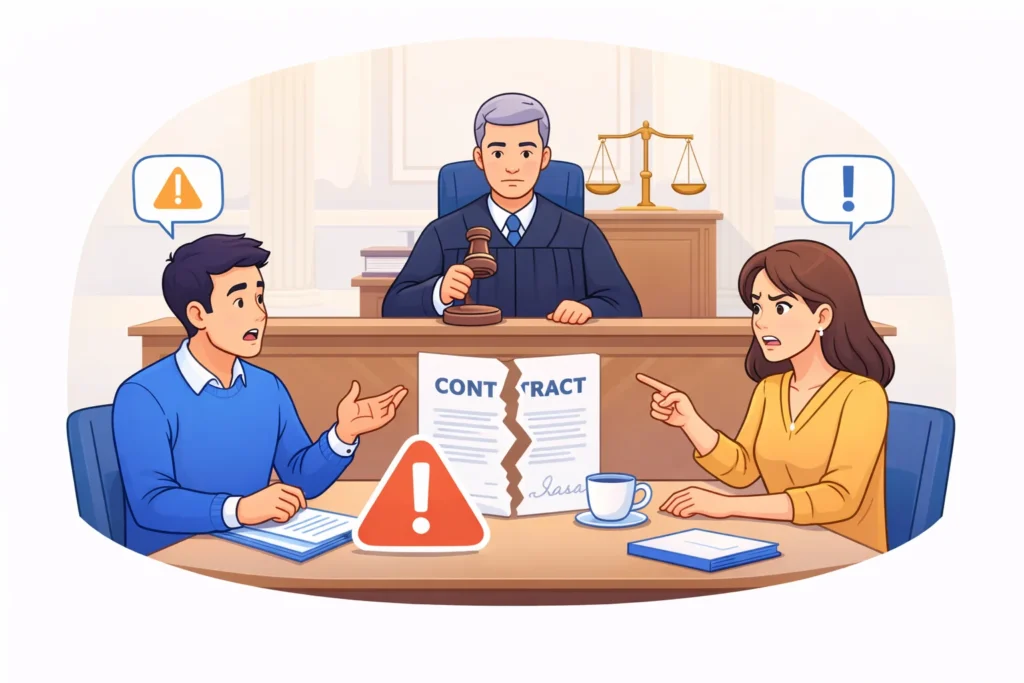
Many professional liability claims arise from disagreements about services, results, or project expectations. Even when a freelancer completes work carefully, clients may still claim that a mistake, delay, or misunderstanding caused financial loss.
Understanding these real-world scenarios can help freelancers recognize where professional liability risks may arise in everyday client work.
Incorrect Business or Strategic Advice
Freelancers who provide consulting or advisory services often influence important business decisions. If a client follows that advice and the outcome negatively affects their revenue or operations, they may claim the advice was negligent or inaccurate.
For example, a marketing consultant might recommend a new advertising strategy that does not perform as expected. If the client believes the strategy caused significant financial loss, they could attempt to hold the consultant responsible.
Missed Project Deadlines
Deadlines are often critical in business projects, especially when they involve product launches, marketing campaigns, or seasonal promotions.
If a freelancer misses an agreed delivery date and the delay affects the client’s business results, the client may argue that the delay caused lost revenue or missed opportunities.
For example, a web developer who fails to deliver a website before a planned product launch could face complaints if the delay affects sales.
Errors in Deliverables or Analysis
Some freelance services involve providing technical work, reports, or data analysis that businesses rely on to make decisions. If an error appears in the deliverable and the client believes it caused financial damage, they may pursue compensation.
For example, a consultant might submit an incorrect financial projection or performance analysis that leads a client to make a costly business decision.
Miscommunication About Scope of Work
Project disputes sometimes occur when the freelancer and the client have different interpretations of what was included in the agreement. If the client believes key services were promised but not delivered, they may claim the freelancer failed to meet professional obligations.
These disputes often arise when project scopes, timelines, or deliverables were not clearly defined in writing.
Incomplete or Dissatisfactory Work
Clients may also file claims if they believe the final work did not meet professional standards or contractual expectations. Even if the freelancer considers the project complete, the client may argue that the service was inadequate or unfinished.
Professional liability claims do not always mean the freelancer made a clear mistake. In many cases, they arise simply because a client believes the service caused financial harm. Professional liability insurance is designed to help address the legal and financial aspects of these disputes when they occur.
What Professional Liability Insurance Typically Covers

Professional liability insurance is designed to address claims related to mistakes, negligence, or problems in professional services provided to clients. When a client alleges that a freelancer’s work caused financial harm, the policy may help cover several types of expenses involved in responding to the claim.
While the exact coverage varies between insurance providers and policies, professional liability insurance commonly focuses on legal defense and financial protection related to service-related disputes.
Below are some of the coverage areas typically included in professional liability policies.
| Coverage Area | What It May Include |
|---|---|
| Legal defense costs | Attorney fees, court costs, and legal representation |
| Settlements | Negotiated payments to resolve a dispute before trial |
| Judgments | Court-ordered payments if a case is decided against the insured professional |
| Claims investigation | Costs associated with reviewing and investigating the complaint |
| Administrative expenses | Certain costs related to responding to legal proceedings |
One important aspect of professional liability insurance is that legal defense costs can arise even if the claim is ultimately dismissed. Responding to lawsuits or formal complaints often requires legal assistance, which can become expensive for independent professionals.
Policies typically apply to claims involving issues such as:
- alleged negligence in professional services
- mistakes or errors in deliverables
- inaccurate advice or recommendations
- failure to deliver services as expected
- missed deadlines that allegedly caused financial loss
Coverage details can vary depending on the insurer, the policy limits selected, and the specific profession involved. Because of this, freelancers often review policy terms carefully to understand what situations may be included or excluded under their coverage.
What Professional Liability Insurance Usually Does NOT Cover
Some risks freelancers face fall outside professional liability coverage and may require general liability insurance. The comparison below explains the difference between the two policies.
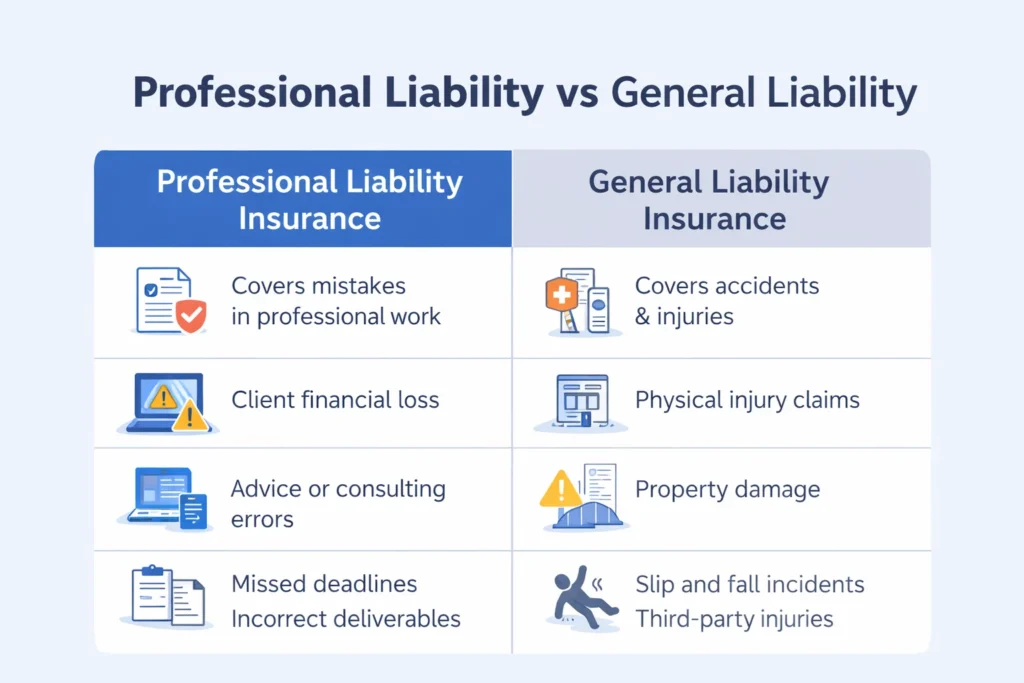
While professional liability insurance can help address many service-related disputes, it does not cover every type of business risk. These policies are designed specifically for claims involving professional mistakes, negligence, or failure to deliver services as expected. Other types of risks usually require different insurance policies.
Understanding the typical exclusions helps freelancers determine when additional coverage may be needed to protect their business.
Below are some situations that professional liability insurance usually does not cover.
| Common Exclusion | Explanation |
|---|---|
| Physical injuries | Injuries to clients or third parties are generally covered by general liability insurance |
| Property damage | Damage to a client’s property is usually handled under general liability coverage |
| Employee injuries | Workplace injuries typically fall under workers’ compensation insurance |
| Intentional wrongdoing | Deliberate misconduct, fraud, or illegal actions are not covered |
| Criminal activity | Claims related to criminal acts are excluded from coverage |
For example, if a client slips and falls during a meeting at a freelancer’s office or workspace, that situation would normally fall under general liability insurance, not professional liability coverage.
Similarly, if a freelancer hires employees and one of them is injured while working, the claim would usually be handled through workers’ compensation insurance, depending on state requirements.
Professional liability insurance focuses specifically on financial losses related to professional services, so freelancers often combine it with other types of business insurance to create more complete protection for their work.
How Much Professional Liability Coverage Freelancers Usually Choose
When freelancers purchase professional liability insurance, they typically select a coverage limit, which represents the maximum amount the insurer may pay for claims under the policy. These limits usually apply per claim and per policy period (often one year).
The appropriate coverage amount can vary depending on the type of services provided, the size of client projects, and any insurance requirements included in client contracts. Freelancers working with larger businesses or higher-value projects may choose higher limits to account for potential financial risks.
Below are some common coverage ranges freelancers often consider.
| Coverage Limit | Typical Situation |
|---|---|
| $250,000 | Small freelance projects or very low-risk services |
| $500,000 | Moderate project work with small businesses |
| $1,000,000 | A common standard limit for many consultants and freelancers |
| $2,000,000+ | Higher-value consulting work or enterprise clients |
Many freelancers select $1 million in coverage per claim because it is commonly requested in business contracts and provides a broader level of protection for professional service disputes. However, the right limit depends on several factors.
Factors That Influence Coverage Limits
Freelancers may consider several elements when choosing a coverage amount:
- Project value – Larger contracts may increase potential financial exposure
- Client requirements – Some companies require minimum insurance limits before signing contracts
- Industry risk level – Fields like technology consulting or financial advisory work may carry higher liability exposure
- Revenue level – Higher business revenue may justify higher coverage limits
- Contractual liability clauses – Certain agreements shift more responsibility to the freelancer
In many cases, freelancers review both their typical project size and contract obligations before deciding on a policy limit. This helps ensure the coverage aligns with the level of professional risk associated with their services.
Typical Cost of Professional Liability Insurance for Freelancers
The cost of professional liability insurance for freelancers can vary depending on several factors, including the type of services provided, the coverage limits selected, and the freelancer’s business profile. In general, freelancers working in lower-risk industries may pay less, while consultants handling higher-value projects may see higher premiums.
For many independent professionals in the United States, professional liability insurance is often priced as a monthly or annual premium based on the risk associated with the services they provide.
Below are typical price ranges freelancers may encounter.
Insurance costs and coverage may vary depending on location, industry, and business activities.
| Freelancer Type | Estimated Monthly Cost |
|---|---|
| Low-risk freelance services | $20 – $40 |
| Independent consultants | $40 – $80 |
| Higher-risk professional services | $80 – $150+ |
These estimates are general market ranges and can vary depending on the insurer and policy details. Some providers offer policies designed specifically for freelancers, which may start at relatively low monthly premiums for basic coverage limits.
Factors That Affect Insurance Pricing
Insurance companies evaluate several factors when determining the price of professional liability coverage. These factors help insurers estimate the likelihood and potential cost of claims.
Common pricing factors include:
- Industry and services provided – Some professions carry higher liability exposure than others
- Coverage limits chosen – Higher limits generally increase premiums
- Annual revenue – Businesses with higher revenue may face greater financial exposure
- Claims history – Previous claims can influence future premiums
- Location – Insurance pricing may vary by state and local legal environments
Freelancers who take on larger projects or work with corporate clients may sometimes need higher coverage limits, which can increase the overall cost of the policy.
Because pricing varies widely between insurers, many freelancers compare multiple providers to understand how coverage options and premiums differ. Later in this guide, we will also look at some insurance companies commonly considered by independent professionals.
Example Providers Freelancers Often Compare
When exploring professional liability insurance, freelancers often compare several insurance providers to understand differences in pricing, coverage options, and policy flexibility. Many insurers offer policies specifically designed for independent professionals, consultants, and small businesses.
While coverage details vary between providers, freelancers typically compare insurers based on factors such as starting price, ease of purchasing coverage online, customer support, and available coverage limits.
Below are examples of insurance providers commonly considered by freelancers in the United States.
| Provider | Known For | Typical Starting Price* |
|---|---|---|
| NEXT Insurance | Digital-first policies designed for freelancers and small businesses | ~$25/month |
| Hiscox | Professional liability coverage for consultants and service professionals | ~$30/month |
| The Hartford | Established insurer offering a range of small business insurance policies | Varies |
*Starting prices are approximate estimates and may vary depending on the profession, location, and coverage limits selected.
Each provider offers slightly different policy structures. Some specialize in fast online quotes for freelancers, while others provide broader small business coverage packages that combine multiple policies.
Because pricing and coverage details can vary significantly, freelancers often compare quotes from multiple insurers before selecting a policy. Reviewing coverage limits, deductibles, and policy exclusions can help ensure the chosen plan aligns with the type of services provided.
Tip: Comparing multiple providers can help freelancers understand both the coverage options available and the typical price range for their specific profession.
Do All Freelancers Need Professional Liability Insurance?
Professional liability insurance is not legally required for most freelancers in the United States. However, many independent professionals choose to consider this coverage depending on the type of services they provide, the clients they work with, and the potential financial impact of disputes.
Freelancers whose work involves professional advice, strategic recommendations, or specialized expertise may face a higher chance of client complaints if a project does not produce the expected results. In these situations, professional liability insurance can help address claims related to alleged mistakes or negligence in professional services.
There are several situations where freelancers may more commonly consider this type of coverage.
When Freelancers Often Consider Professional Liability Insurance
- Providing consulting or advisory services that influence business decisions
- Managing client projects with strict deadlines or financial outcomes
- Working with corporate clients that require insurance proof in contracts
- Handling data, analysis, or technical implementations
- Delivering services where mistakes could lead to financial losses for the client
For example, a marketing consultant responsible for managing a campaign or a technology consultant configuring a client’s systems may face claims if the client believes the service caused business losses.
Situations Where Coverage May Be Less Common
Some freelancers may face lower professional liability exposure, especially if they work on very small projects or provide services where client financial risk is minimal. Examples may include occasional freelance work, hobby-based services, or projects that do not involve business-critical outcomes.
Even in lower-risk situations, some freelancers still choose to explore professional liability insurance as their business grows, particularly when working with larger clients or higher-value contracts.
Because freelance work can vary widely between industries and project types, the decision to purchase professional liability coverage often depends on the level of responsibility a freelancer carries for the client’s business results.
Frequently Asked Questions
Is professional liability insurance required for freelancers?
Professional liability insurance is usually not legally required for freelancers. However, some clients—especially larger companies—may require proof of coverage before signing a contract. In these cases, freelancers may need to carry a policy that meets the client’s minimum coverage limits.
What is the difference between professional liability insurance and E&O insurance?
Professional liability insurance and Errors and Omissions (E&O) insurance generally refer to the same type of coverage. Both terms describe policies designed to help address claims related to professional mistakes, negligence, or service-related disputes.
Can freelancers buy professional liability insurance without forming an LLC?
Yes. Freelancers can typically purchase professional liability insurance as sole proprietors, without forming a company or LLC. Many insurers offer policies specifically designed for independent professionals working under their personal name or a registered business name.
Does professional liability insurance cover missed deadlines?
It may apply if a client claims that a missed deadline caused financial harm related to the professional services provided. Whether coverage applies depends on the policy terms and the details of the claim.
How much professional liability insurance do freelancers usually buy?
Many freelancers choose coverage limits around $1 million per claim, as this level is commonly requested in client contracts. However, the appropriate limit depends on factors such as project size, industry risk, and contractual obligations.
Is professional liability insurance the same as general liability insurance?
No. The two policies cover different types of risks.
– Professional liability insurance focuses on claims related to professional services, advice, or project work.
– General liability insurance typically covers physical injuries, property damage, or accidents involving third parties.
Some freelancers carry both policies to address different types of business risks.
Can professional liability insurance cover legal defense costs?
Many policies include coverage for legal defense expenses, such as attorney fees and court costs, when responding to claims related to professional services. Coverage details can vary between insurers and policies.
When do freelancers usually start considering this insurance?
Freelancers often begin exploring professional liability insurance as their business grows, particularly when they start working with larger clients, signing formal contracts, or handling projects where mistakes could have financial consequences for the client.
Do freelancers need professional liability insurance?
Not every freelancer is required to carry insurance, but many professionals consider professional liability insurance for freelancers when they begin working with larger clients, signing formal contracts, or providing advice that could affect a client’s business results.
If you’re exploring coverage options, the next step is often to compare providers and review policy terms to understand how different insurers structure professional liability protection for freelancers and consultants.
Compare Professional Liability Insurance Quotes for Freelancers
If your freelance work involves providing advice, managing client projects, or delivering specialized professional services, reviewing professional liability insurance options can be a useful step in managing business risk.
Because policies can vary between insurers, freelancers often compare providers to understand differences in coverage limits, pricing, deductibles, and policy terms. Even small differences in policy details can affect how claims are handled.
When comparing professional liability insurance options, freelancers typically review:
- Coverage limits offered by the policy
- Deductible amounts required for claims
- Types of professional services covered
- Policy exclusions and limitations
- Monthly or annual premium cost
Many insurance providers now allow freelancers to request quotes online and adjust coverage limits to match the size of their projects or contractual requirements.
Next Steps for Freelancers
If you are considering professional liability coverage, you may want to:
- Review typical coverage limits used in your industry
- Compare multiple insurance providers
- Check whether your client contracts require proof of coverage
- Evaluate how coverage limits align with the size of your projects
Comparing quotes from several insurers can help freelancers better understand available coverage options and pricing before choosing a policy.
Next: If you want to explore related topics, you can also read:
- E&O Insurance for Consultants: Protecting Yourself From Advice-Related Claims
- Professional Liability Insurance Cost: What Freelancers Actually Pay and Why
- Professional vs General Liability Insurance: Which Risks Each Policy Covers
These guides explain how coverage works in different situations and how freelancers typically evaluate insurance options for their business.
As freelance businesses grow and client expectations increase, many professionals begin exploring professional liability insurance for freelancers to help manage potential legal and financial risks.
This content is for informational purposes only. Readers should consult a licensed insurance professional before making coverage decisions.




3 Comments